The Danger Theory: A Visual Guide
Unlocking the Next Generation of Biomedical AI
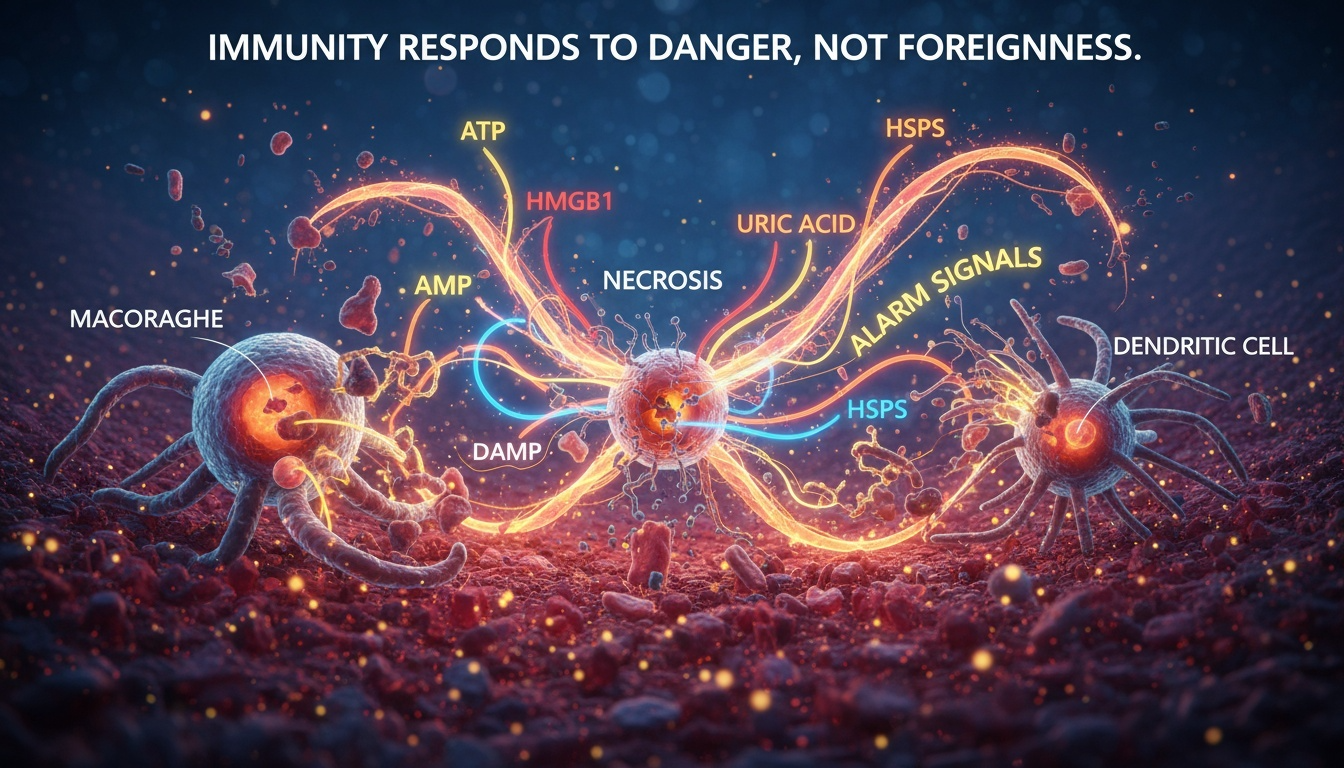
The Core Concept: Immunity Responds to DANGER, Not Foreignness
When cells undergo stressful, necrotic death, they release internal molecules called Damage-Associated Molecular Patterns (DAMPs). These act as alarm signals, activating immune cells to initiate inflammation and repair.
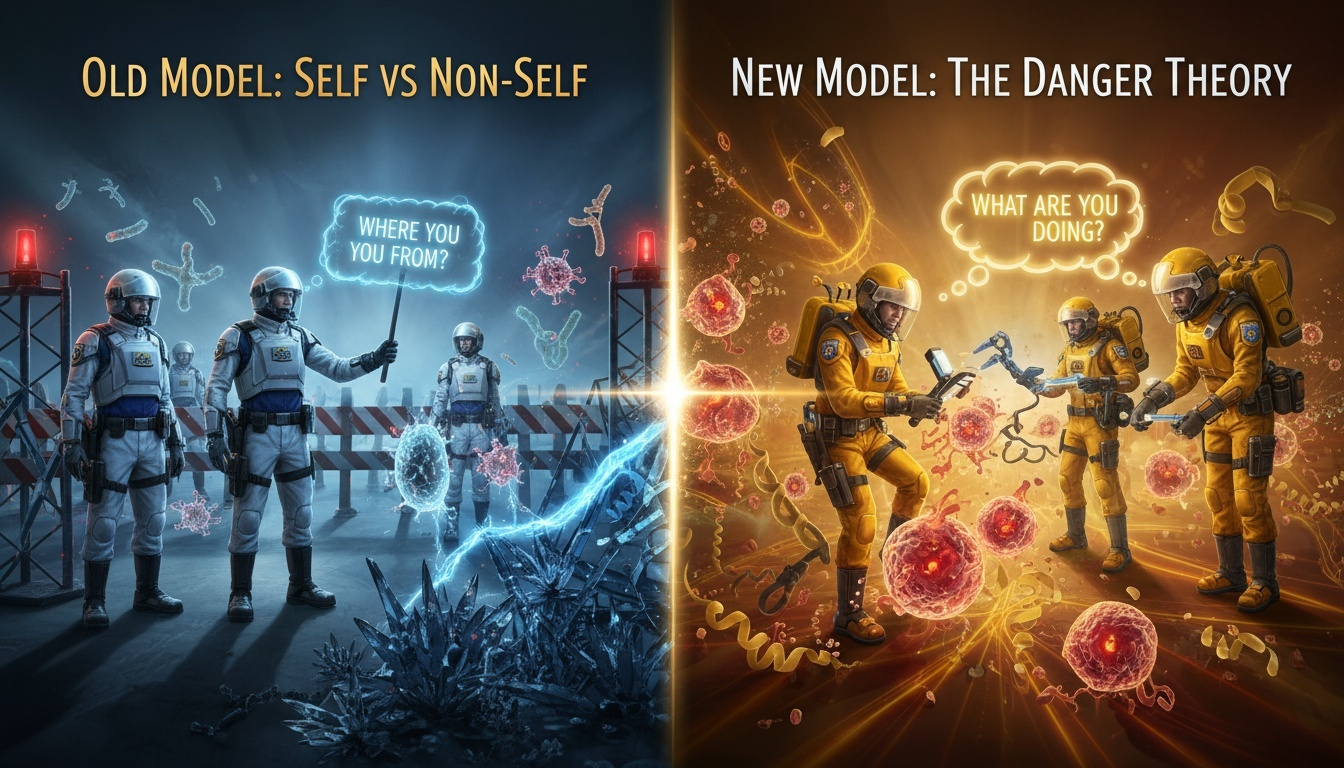
OLD MODEL: Self vs. Non-Self
- Primary Trigger: Foreignness. The immune system attacks anything it doesn't recognize as "self".
- Core Question: "Where are you from?"
- Role: Xenophobic Border Patrol.
- Fails to Explain: Autoimmunity (attacking self), tolerance of gut microbes (ignoring non-self).
NEW MODEL: The Danger Theory
- Primary Trigger: Damage & Context. The immune system attacks anything that causes cellular stress.
- Core Question: "What are you doing?"
- Role: Tissue Maintenance & Repair Crew.
- Logically Explains: Autoimmunity (a response to chronic damage), cancer immunoevasion.
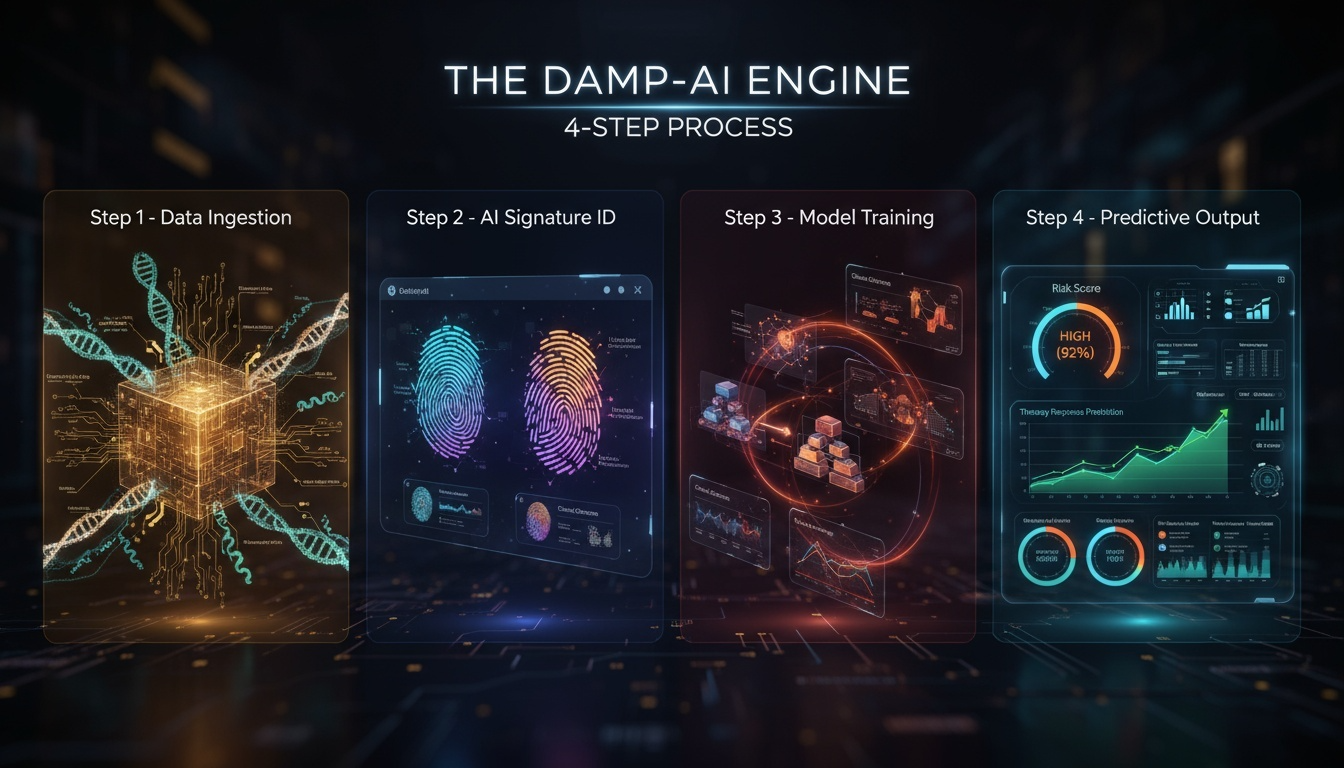
The DAMP-AI Engine: A Simplified 4-Step Process
Data Ingestion
Collect multi-omics patient data (genomics, proteomics, etc.).
Signature ID
AI identifies unique DAMP "fingerprints" for diseases.
Model Training
ML models learn to link signatures to clinical outcomes.
Predictive Output
Generate risk scores & therapy response predictions.
Key Takeaways for AI Strategists
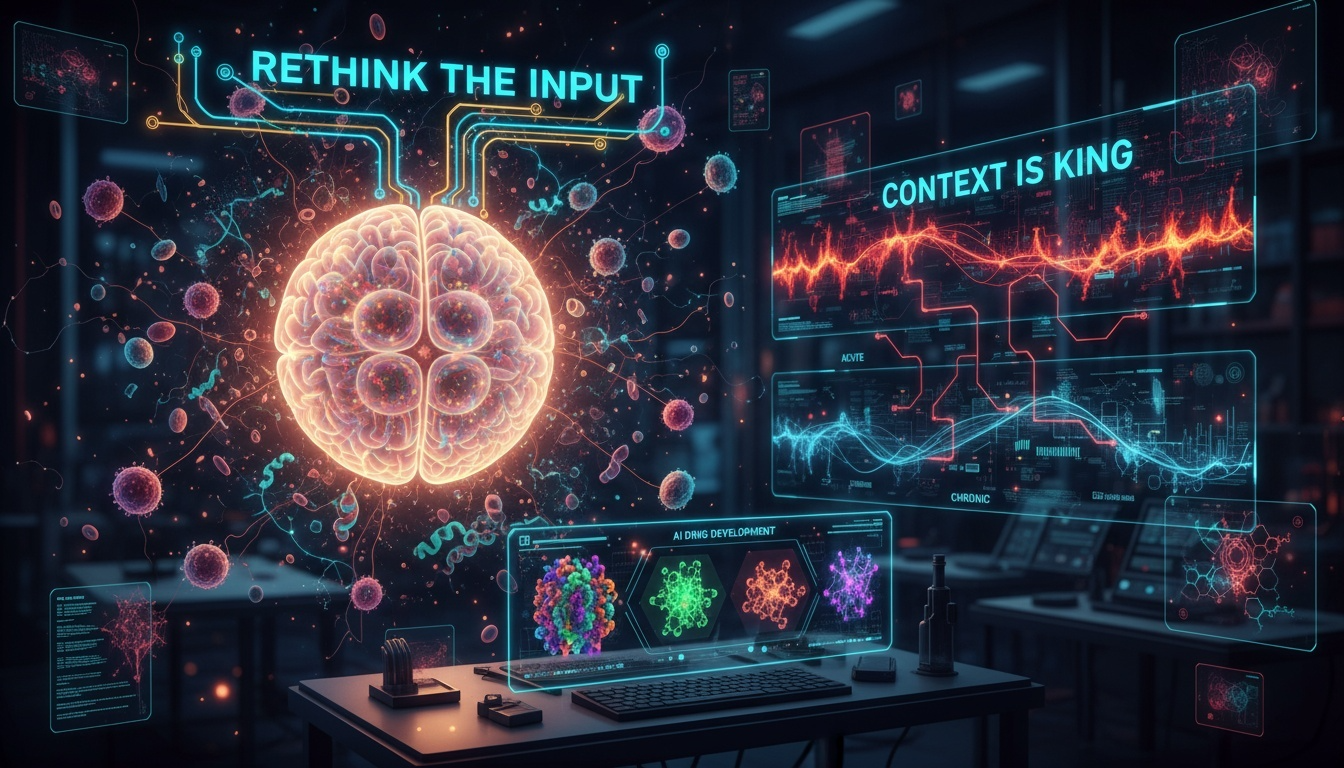
1. Rethink the Input
The most valuable data isn't the presence of foreign agents, but the evidence of cellular damage. AI models must be retrained on this new reality.
2. Context is King
An effective AI must differentiate between acute (healing) and chronic (pathological) danger signals, requiring sophisticated temporal analysis.
3. From Broad to Specific
The future is not "immunosuppression" but "danger signal modulation." This opens a new frontier for highly specific, AI-driven drug development.